Snowmelt and spring rain are when many basements take on water. Work through this list in March, before the big melt. It uses general advice. For anything beyond these checks, call a licensed plumber.
1. Test your sump pump
Check that the pump is plugged in and the outlet and breaker are on.
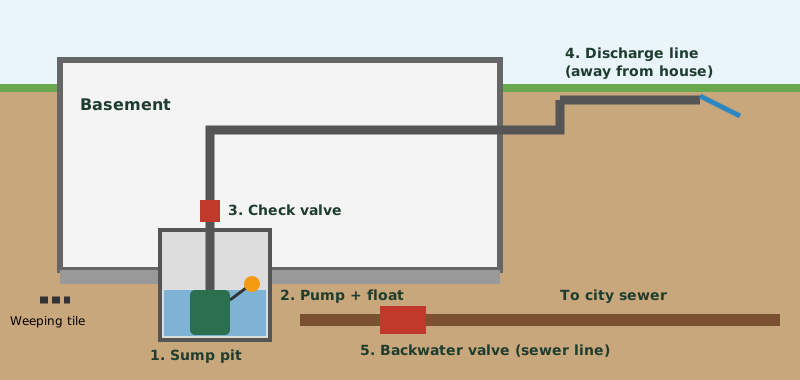
Slowly pour a bucket of water into the pit. The float should rise, the pump should start, empty the pit and shut off on its own.
Check that the float moves freely and the pit is clear of debris.
If you have a battery backup, unplug the main pump and repeat the test. Check the battery and charger.
If the pump doesn't start, is very noisy or runs without stopping, call a plumber.
The parts to check.
2. Check the discharge line
Go outside and make sure the discharge pipe isn't frozen, blocked by snow or ice, or crushed.
It should drain onto your lawn, well away from the foundation and away from neighbours' property.
3. Downspouts and grading
Clear eavestroughs and downspouts of leaves and ice.
Extend downspouts so water drains away from the house.
Clear snow away from the foundation and window wells, and look for low spots where water pools against the house.
4. Backwater valve and floor drain
If you have a backwater valve, follow the manufacturer's instructions to open the cap and check that the flapper moves freely and is free of debris.
Keep the floor drain clear.
Don't pour grease or wipes down drains.
5. Alarms and storage
Put a water alarm on the floor near the pit and the lowest point of the basement.
Raise valuables, papers and electronics off the basement floor.
6. City of Greater Sudbury sump pump subsidy (RIISP)
The City's Residential Inflow and Infiltration Subsidy Program (RIISP) can help with costs such as a first sump pit and pump, for eligible homes on City sewer. Rules and amounts are set by the City, and quotes from licensed plumbers are needed. Read the current details on the City's RIISP subsidy amounts page before you book any work.